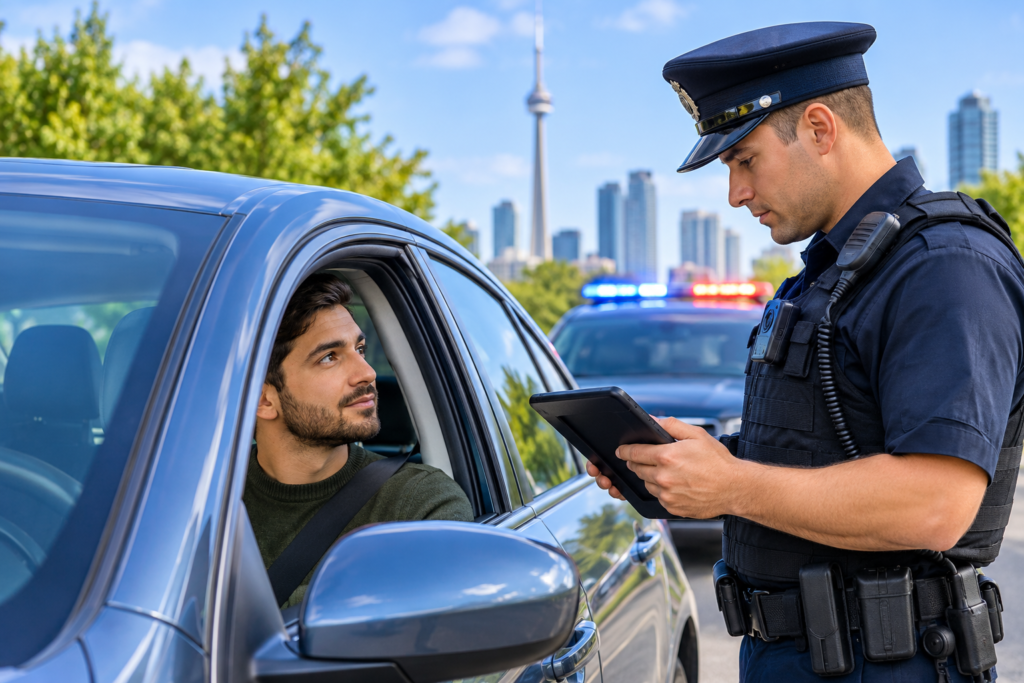
Most of the 2026 changes come from the Safer Roads and Communities Act (Bill 197). Ontario passed it in November 2024, and its parts have come into force in stages since then.
In this guide14 sections
- Longer Roadside Suspensions for Drinking and Drug Driving Jan 1, 2026
- Zero Tolerance Still Means Zero for G1, G2 and Drivers 21 and Under
- Tougher Penalties After an Impaired Driving Conviction July 1, 2026
- Lifetime Suspension for Impaired Driving Causing Death
- Bigger Penalties for Stunt Driving and Street Racing
- Municipal Speed Cameras Are Gone November 2025
- More Highways at 110 km/h
- Viral Canada-Wide Driving Laws: Fact-Checked
- Ontario Handheld Device Rules That Still in Force
- How to Spot a Fake New Driving Law Post
- What This Means for New Drivers in Barrie and Simcoe County
- Learn Ontario Rules From an MTO-Approved School
- Conclusion
- Frequently Asked Questions
Longer Roadside Suspensions for Drinking and Drug Driving Jan 1, 2026
If police find you in the warn range, your licence is suspended on the spot. The warn range means a blood alcohol concentration of 0.05 to 0.079, or failing a roadside sobriety test. That isn’t a criminal charge, but the penalties are real, and from 2026 they’re longer:
| Occurrence | Before 2026 | Now |
|---|---|---|
| 1st | 3-day suspension | 7-day suspension, education program, $250 penalty |
| 2nd | 7-day suspension | 14-day suspension, treatment program, $350 penalty |
| 3rd | 30-day suspension | 30-day suspension, treatment program, 6-month ignition interlock, $450 penalty |
The “look-back” window has also doubled. Ontario now counts earlier suspensions from the past 10 years instead of 5 when deciding whether this is your first, second or third. A warn-range stop from 2019 can now make a 2026 stop count as a “second”.
At 0.08 or above, or if you refuse a test, the penalty is an immediate 90-day suspension and a 7-day vehicle impoundment, and you may also face criminal charges.
Image: ontario-impaired-driving-suspensions-2026.webp. Alt text: Ontario roadside suspension lengths before and after 2026.
Zero Tolerance Still Means Zero for G1, G2 and Drivers 21 and Under
If you hold a G1 or G2, or you’re 21 or under, you must have no alcohol and no cannabis in your system while driving. Not “under the limit”. None.
The longer 7-, 14- and 30-day suspensions apply to you too. A conviction can add a further suspension, or even cancel your licence.
For a new driver, that can set your licence progress back and push your insurance costs for G2 drivers way up. The simple rule: if you’ve had anything, don’t drive.
Tougher Penalties After an Impaired Driving Conviction July 1, 2026
Ontario’s government says some penalties for criminal impaired driving convictions changed from July 1, 2026. After a conviction you now face:
- Licence suspension: at least 1 year for a first conviction, 3 years for a second within 10 years, and a lifetime suspension for a third.
- Ignition interlock: a breath-testing device wired into your car that won’t start the engine if it detects alcohol. It’s required for at least 1, 3 or 6 years, depending on the offence.
- A zero-alcohol, zero-drug condition: at least 6 months once the interlock comes off.
Lifetime Suspension for Impaired Driving Causing Death
A conviction for impaired driving causing death now means a lifetime licence suspension. It can only be reviewed after 25 years, and only if strict criteria are met.
Bigger Penalties for Stunt Driving and Street Racing
Bill 197 also raised the stakes for stunt driving, street racing and similar driving:
- Fines of $2,000 to $10,000, possible jail time of up to 6 months, or both.
- Licence suspension of at least 1 year for a first conviction, 3 years for a second, and indefinite for a third.
Stunt driving includes going 40 km/h or more over the limit on roads posted under 80 km/h, or 50 km/h or more over on faster roads. On Highway 400, that’s easier to hit than many people think.
Municipal Speed Cameras Are Gone November 2025
Ontario banned municipal automated speed cameras. The cameras stopped issuing tickets in November 2025.
Here’s the catch: speeding in school zones and community safety zones is still illegal, and police still enforce it. The province is funding traffic-calming instead, such as speed humps, raised crosswalks and better signage. So in some school zones near you, the road itself may slow you down.
More Highways at 110 km/h
Ontario is raising the speed limit from 100 to 110 km/h on more highway sections. The first changes came in late June 2026. The province says almost 90% of the provincial highway network will eventually be at 110, including sections of the QEW and Highways 400, 401, 402, 403, 416 and 417.
For drivers around Barrie: not every stretch changes at once. The posted sign is the law. If it says 100, it’s 100.
G2 drivers can use these highways, but it’s worth reading whether you can drive on the highway with a G2 and practising highway merging with an instructor first.
Viral Canada-Wide Driving Laws: Fact-Checked
These are the claims we hear most from students. Here’s the truth behind each one.
Canada bans handheld devices nationwide / New Canadian driving law in September 2025
There’s no new national law. Handheld device rules are set by each province, and Ontario has banned holding or using a phone while driving since 2009.
New $600 national fine for distracted driving
There’s no national fine. In Ontario, a first distracted-driving conviction costs $615 if you settle out of court, or up to $1,000 if you’re summonsed or lose in court. You also get 3 demerit points and a 3-day licence suspension. These rules have been in place for years.
The legal alcohol limit in Canada dropped to 0.05
The criminal limit is still 0.08. Ontario’s 0.05 warn range isn’t new either. What changed in 2026 is how long the warn-range suspensions last (see above).
AI speed cameras and mandatory driver-assist tech across Canada
There’s no federal mandate. Ontario has actually moved the other way and removed municipal speed cameras.
All seniors must retake their road test
Ontario’s senior driver renewal program isn’t new. Drivers 80 and older go through a renewal process every two years, and a road test is only needed in some cases.
Ontario Handheld Device Rules That Still in Force
| Fine (out of court / court) | Demerits | Suspension | |
|---|---|---|---|
| 1st conviction | $615 / up to $1,000 | 3 | 3 days |
| 2nd conviction | $615 / up to $2,000 | 6 | 7 days |
| 3rd+ conviction | $615 / up to $3,000 | 6 | 30 days |
G1 and G2 drivers pay the same fines but get no demerit points. Instead they face a 30-day suspension for a first conviction, a 90-day suspension for a second, and cancellation of their licence for a third.
How to Spot a Fake New Driving Law Post
Before you share or panic, check for these red flags:
- No official link. Real changes link to ontario.ca, Ontario e-Laws or the Ontario Newsroom.
- “Canada-wide” claims about rules provinces control, like phones, speed limits or licences.
- An urgent date but no bill number or act name.
- Clickbait sources: insurance or immigration sites, or video channels repeating each other.
- Exact fines with no province named.
When in doubt, check the Ontario government’s road safety pages or ask your driving instructor.
Image: fake-driving-law-post-fact-check.webp. Alt text: How to spot a fake new driving law post.
What This Means for New Drivers in Barrie and Simcoe County
If you’re on a G1 or G2, the 2026 changes hit hardest in two places:
- Zero tolerance plus longer suspensions. One drink or one joint before driving can now cost you a 7-day suspension on the spot, plus penalties, and it stays on your record for 10 years.
- Phone use. A first handheld conviction means a 30-day suspension for a novice driver. That’s a month of not driving to work, school or practice.
Both can slow down your move from G2 to a full G licence and raise your insurance for years.
The best protection is knowing the rules before they catch you out. A good Beginner Driver Education course teaches the current rules, not the ones your parents learned.
Learn Ontario Rules From an MTO-Approved School
Road Safety Canada online driving classes cover Ontario current traffic laws, penalties and zero-tolerance rules. Our G2 driving lessons in Barrie then put them into practice on real Simcoe County roads.
New to the area? Visit our Barrie driving school page.
Call 705-300-5570 or register online.
Conclusion:
The real story of 2026 isn’t a dramatic Canada-wide phone ban. It’s quieter, and it matters more for your licence:
- longer suspensions for any drinking or drug driving,
- a 10-year memory for past offences,
- tougher penalties after an impaired conviction,
- no more municipal speed cameras,
- more 110 km/h highways.
If you’re a new driver, zero tolerance and the handheld rules are the two to take most seriously.
We’ll keep this page updated as Ontario’s rules change, so bookmark it before you trust the next viral post.
At Road Safety Canada, our MTO-approved instructors teach Ontario’s current laws to drivers across Barrie and Simcoe County, so you learn the rules that actually apply. Call 705-300-5570 or book your course today.
Frequently Asked Questions
What are the new driving laws in Ontario for 2026?
The biggest changes are longer roadside suspensions for drinking and drug driving from January 1, 2026, and tougher penalties after an impaired driving conviction from July 1, 2026. Ontario also removed municipal speed cameras and is moving more highways to 110 km/h.
Did Canada ban handheld phones while driving nationwide?
No. Phone rules are set by each province. Ontario has banned holding or using a handheld device while driving since 2009, and there is no new national law.
Was there a new Canadian driving law in September 2025?
No national driving law took effect in September 2025. Most viral posts about it mix up rules from different provinces or describe laws that already existed.
What happens if a G2 driver has any alcohol in Ontario?
G1 and G2 drivers, and drivers 21 and under, must have zero alcohol and zero cannabis. A first offence now brings an immediate 7-day suspension and a $250 penalty, and a conviction can lead to a longer suspension or licence cancellation.
Does Ontario still have speed cameras?
No. Ontario banned municipal automated speed cameras, and they stopped issuing tickets in November 2025. Police still enforce speed limits, including in school zones.
Is the speed limit on Highway 400 now 110 km/h?
Some sections of Highway 400 are included in Ontario’s move to 110 km/h, but not every stretch changes at the same time. Always follow the posted speed limit sign.
Where can I check if a new driving law is real?
Check official sources such as ontario.ca, Ontario e-Laws and the Ontario Newsroom. If a post has no official link or bill name, treat it with caution.
Ready to practise with an MTO-approved instructor?
Build real confidence in traffic with G2 lessons and Full G road test preparation in Barrie and across Simcoe County.